The forty-year Struggle for Peace and Equality by the Pataki people.
The history of the Pataki Peoples Army is the story of struggle against the greed and indifference to suffering of the people by those who live in the opulent wealth of their exploitation. The forces loyal to the governing class sought to starve the people of the Pataki jungles, for the benefits of their rubber plantations, and with their oppressive instruments, prevented the free and fair distribution of food grown in the lands. The Pataki people engaged in peaceful protest seeking only justice paid the price of their blood for this meek protest. From the grounds soaked in the blood of these martyrs came a renewed understanding of the twin-oppressors -- the gun and the exploitative distribution of their own resources -- and sought to redistribute the crops stolen from them for capitalist designs.
 The Pataki Peoples Army spared the people from starvation, while only mildly
inconveniencing the bulging bank accounts of the ruling classes in their glittering
estates. Still, the redistribution of food provided the masses of the popular uprising
with a weapon the ruling classes could not allow them to have: a small portion of their
freedom. The government class set the murderous savages of the Guwimithian army onto
the free Pataki peoples, slaughtering them by the thousands, enslaving hundreds of
thousands more in their plantations and factories.
The Pataki Peoples Army spared the people from starvation, while only mildly
inconveniencing the bulging bank accounts of the ruling classes in their glittering
estates. Still, the redistribution of food provided the masses of the popular uprising
with a weapon the ruling classes could not allow them to have: a small portion of their
freedom. The government class set the murderous savages of the Guwimithian army onto
the free Pataki peoples, slaughtering them by the thousands, enslaving hundreds of
thousands more in their plantations and factories.
Temporarily set-back, the valiant heroes of the PPA retreated to the mountains to refocus their energies on the new, more violent phase of conflict brought upon them. For years, the mountains were where the Guwimithian Army loosed the fiery rage of their injustice upon the freedom fighters of the PPA. And while the blood of the martyrs flowed down the Pataki River and mixed with the grain of freedom in the hearts of the Pataki people, and would raise up more warriors for the struggle. And the tide turned against the oppressors.
Victory.
The PPA's policy of valiant resistance was turning the conflict against the oppressors. In 278, after eighteen years of their aggression, the Guwimithian was to finally taste the fruits of their political masters' greed, with a crushing defeat in the city of Patak. The liberators would prove that might would not defeat the right cause of people, and that the city of Patak would be the centre of free, fair and equal distribution of resources, each according to need, and each according to the wealth of the bounty of their own labours. No longer would their labours accumulate in the vaults of the ruling class, or in the bellies of their Agrarian Overlords. They would labour, but this time, for their own benefit.
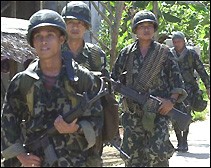 So it would continue for the twenty years hence. The liberators, the Pataki Peoples
Army, established the Central Committee for the Allocation of Resources. The first
priority had to be that of managing the food crops, preventing the same travesty of
capitalist, iniquitous injustice from inflicting its divisiveness in this new era.
Quickly, starvation was eradicated, and soon surpluses were created, allowing storage
in preparation for lean years. This was in strict contravention of capitalist "law",
which dictates that any excess should be sold for the benefit of the ruling class.
So it would continue for the twenty years hence. The liberators, the Pataki Peoples
Army, established the Central Committee for the Allocation of Resources. The first
priority had to be that of managing the food crops, preventing the same travesty of
capitalist, iniquitous injustice from inflicting its divisiveness in this new era.
Quickly, starvation was eradicated, and soon surpluses were created, allowing storage
in preparation for lean years. This was in strict contravention of capitalist "law",
which dictates that any excess should be sold for the benefit of the ruling class.
Corruption is an essential phenomenon of the capitalist system and without its existence, it could not survive. Under the old authorities, contracts were awarded according to the size of kickbacks promised to the Governors or their administrators. The communities of the city of Patak had neither autonomy nor democratic mechanisms to affect the allocation of resources. Yet, with the new order would come new government.
A capricious and self-centred government would no longer be feared; instead a new dawn arrived, with it, the meritorious selection of administrators of enlightened character, who were devoted to the service of the people. Prosperity flourished in the new era, much to the jealous avarice of their former ruling classes, who redoubled their efforts, in vain, to retake the city.
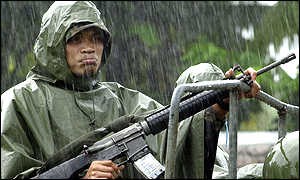 With the food crops secured, the Pataki people dedicated themselves to building a new
order. Schools, hospitals, centres of adult learning, and roads were built. Mines
doubled their production, and factories and munitions factories were being built to
fuel the desire of the Pataki people to keep their new found self-determination.
Thousands more devoted their lives to the protection of what they had, and the Peoples'
Army exploded with new levels of strength.
With the food crops secured, the Pataki people dedicated themselves to building a new
order. Schools, hospitals, centres of adult learning, and roads were built. Mines
doubled their production, and factories and munitions factories were being built to
fuel the desire of the Pataki people to keep their new found self-determination.
Thousands more devoted their lives to the protection of what they had, and the Peoples'
Army exploded with new levels of strength.
Despite their efforts, the armies of the oppressor found that the devotion of the people to their new-found freedoms could not be broken. Thousands crossed military lines to join the new utopia of the Pataki people, and thousands joined the Peoples' Army in its defence. The armies of the ruling class were evermore in retreat, never to see the hallowed Pataki valley again.
This present struggle.
Since that time, the Guwimithian regime has passed away, collapsed under the weight of its own excess and self-indulgence. Now, a new political structure has been implemented, but even this is not complete.
 The democratic institutions are there, but the same influences of the old order
remain: the same triumvirate of greed, nepotism and monetary omnipotence rules. The
so-called liberated masses remain as shackled to the walls of capitalist exploitation
as they did before, only now the exploitation feigns weakness with tales of economic
woe, and feigns a lack of political influence by installing a supposedly democratic
system of government.
The democratic institutions are there, but the same influences of the old order
remain: the same triumvirate of greed, nepotism and monetary omnipotence rules. The
so-called liberated masses remain as shackled to the walls of capitalist exploitation
as they did before, only now the exploitation feigns weakness with tales of economic
woe, and feigns a lack of political influence by installing a supposedly democratic
system of government.
After this, in good faith, the Peoples' Army agreed to the secession of hostilities on March 1st, 301ap.
It marked the beginning of the third phase of the struggle of the Peoples' Army. Not with machine guns and bullets, but now a propoganda war using their new tools of oppression: the television, the radio, the political opinion poll, and the strength of their international allies. The Army has started behind the ball, just as it did in 260, high in the Pataki mountains, far from the beloved valley of our civilisation's birth.
Yet, the struggle will continue, and there will be no capitulation. We will not so easily surrender the benefits of the struggle to the enemy, regardless of the deceptions presented to us. We are resolved and resolute.
The Peoples' Army has defended valiantly from the beginning, and so it shall continue to defend the meritocracy of the Pataki Peoples' State.
This website is not copyrighted, for information should be free to all.
<Tech>

Copyright © 2002 - Mike Ham
(except where copyright held by Edward Mooney, Jr., or their respective authors)
All Rights Reserved. Not to be copied or reproduced in any way without permission.
Webmaster: Mike Ham