
|
Issue 9,
Volume 8, 23 July 301 AP The Story behind the news. |

|
Business
How Nuclear power could come back Auranj Mfg issue profit warning Politics Utania's new government Lasanne's election results Nystonia's election results Savana's election results Utani B'yan's election results Law Will this old man get any justice? International COVER: Is Rovens falling apart "Zartanian go home!" And they are. Sport Football: The agony of defeat - Luka takes a tumble! Football: Savaj sack their coach. |
|
Subscribe to Zeitgeist
Subscriber queries |
|
What IS a Zeitgeist?
Jerman for "Spirit of the Age". In this case it is to mean the "spirit" of the Utanian people, the magazine reporting the people's thoughts behind the press-releases and reported news. Want an article published? Would you like an article published by Zeitgeist Magazine? Please send the text of the article for evaluation, OR send us an email describing the issue/story you would like published to the email Editor@jaggedblue.com. |
|
©Zeitgeist Magazine, 301 AP.
Email: Editor@jaggedblue.com <TECH> ©Mike Ham, 2001. All rights reserved. No reproduction without, at least, tacit approval. ;-) |

Rioting and burnt out cars; police baton charges and water cannons; workers protesting, waving red flags of the Pataki Communist State; peace negotiations cancelled, and an army on the verge of declaring martial law; and a President without authority, with his main coalition ally walking away. Is Rovens about to collapse?
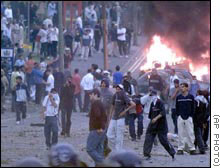 Rovens is witness to the worst violence since the end of the Guwimithian
Empire. Youths and workers are alternately marching in protest and rioting violently
against a government they believe has betrayed them, against an Armed forces that is still
very much in control, and against the seemingly planned act of political violence against
one of the heroes of the Pataki people. And now, with the Communists walking away from
negotiations, the country is irrevocably split once again, and has a President who is
implicated in a political assassination, and without a mandate to continue to govern.
Rovens is witness to the worst violence since the end of the Guwimithian
Empire. Youths and workers are alternately marching in protest and rioting violently
against a government they believe has betrayed them, against an Armed forces that is still
very much in control, and against the seemingly planned act of political violence against
one of the heroes of the Pataki people. And now, with the Communists walking away from
negotiations, the country is irrevocably split once again, and has a President who is
implicated in a political assassination, and without a mandate to continue to govern.
The next few days will be the most telling for the Peoples Republic of Rovens. The communists have sworn to have nothing to do with President K'yonte, or the PIMR coalition government, and have walked away from negotiations with the government to end a currently peaceful civil war that has raged for forty years. What will the government do? Can it restore confidence? Can it restore order to the violence-ridden streets and still not appear as though the Army has taken control?
A nation of troubles
Rovens has always been a country with problems. A senior official in the UNVCOCN mission to the "Gvonj" territory accused the Mission Director of failing to resolve all of the problems of the region even before the UNV had voted to restore self-government. He cited the still heavy hand of the Guwimithian-dominated military, the massive economic disparity between rich and poor, and the unresolved war with the communist rebels.
 Yet, to all observers, the PIMR coalition brought hope. Everyone believed that this
loose coalition of several parties actually represented the hope of Rovens. The "Peoples
Independence Movement of Rovens" (PIMR) represented almost 90% of the regional councils and
provinces in the UNV territory, and despite its internally diverse political views -- from
the hard-line Pataki Communist Party, to the moderate-right wing Peoples Party of Gvonj --
the coalition was devoted to one core belief: democratic and equally-shared self-government.
There were challenges, admitted PIMR spokeswoman Janomi Kontoy, but with the spirit of
determination and cooperation between all three peoples of Rovens -- the Gvonj, Pataki and
amorphous Guidarm -- the nation could not fail.
Yet, to all observers, the PIMR coalition brought hope. Everyone believed that this
loose coalition of several parties actually represented the hope of Rovens. The "Peoples
Independence Movement of Rovens" (PIMR) represented almost 90% of the regional councils and
provinces in the UNV territory, and despite its internally diverse political views -- from
the hard-line Pataki Communist Party, to the moderate-right wing Peoples Party of Gvonj --
the coalition was devoted to one core belief: democratic and equally-shared self-government.
There were challenges, admitted PIMR spokeswoman Janomi Kontoy, but with the spirit of
determination and cooperation between all three peoples of Rovens -- the Gvonj, Pataki and
amorphous Guidarm -- the nation could not fail.
It seems the road to "not failing" is paved with trials and tribulations for Rovens. An attempted military coup in late March, saw the troubles with the military come to the fore. There remained many in the Army who believed that that this democratic socialist government did not have the right to govern. The Guwimithian Army had ruled the region for the past hundred-plus years, so why should it not continue to do so? Afterall, it had the most experience, and under the Guwimithians there wasn't the economic problems the country was now suffering since the collapse of their bankroll -- the Empire. Financial bankruptcy, a collapsing economy and rocketing unemployment underscored the country's troubles, and only fueled the discontent on all sides: military and popular. This week it was the people's turn to vent their anger at the government trapped in the middle.
Assassination: "Political terrorism"
On Thursday afternoon, the immensely popular hard-liner in the Pataki Communist cabinet traveled by road to Kpotha to speak to a crowd of thousands of discontented workers and would-be communists, whose industrial and farming region was being severely hit by the economic turn-down.
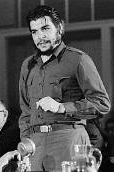 Rhosei Penyassa was not unknown to most of the people in the region. He was the man most
responsible for turning the landlocked rebel-occupied region centred around the city of
Patak into a self-governing communist powerhouse that would produce its own bullets to
fight the Guwimithian army, while it manufactured its own butter. It was prosperous, and
equality abounded, for men and women alike. Health services were rudimentary, but they were
free, and thousands of people were alive because of this. Education began to instruct young
men and women in basic mathematics and language, in geography, communist political
philosophy and the history of the Pataki people, who had been oppressed for hundreds of
years -- first by the Savaj Empire, and then the Guwimithian one. They learned the culture
and history of their ancestors. They had a connection with the past, and also their future.
Many of them graduated as engineers, and the city began to develop its own factories,
produce its own radios, its own machine guns, and its own clothing. And one man lead this
revolution: Rhosei Penyassa.
Rhosei Penyassa was not unknown to most of the people in the region. He was the man most
responsible for turning the landlocked rebel-occupied region centred around the city of
Patak into a self-governing communist powerhouse that would produce its own bullets to
fight the Guwimithian army, while it manufactured its own butter. It was prosperous, and
equality abounded, for men and women alike. Health services were rudimentary, but they were
free, and thousands of people were alive because of this. Education began to instruct young
men and women in basic mathematics and language, in geography, communist political
philosophy and the history of the Pataki people, who had been oppressed for hundreds of
years -- first by the Savaj Empire, and then the Guwimithian one. They learned the culture
and history of their ancestors. They had a connection with the past, and also their future.
Many of them graduated as engineers, and the city began to develop its own factories,
produce its own radios, its own machine guns, and its own clothing. And one man lead this
revolution: Rhosei Penyassa.
 On that same Thursday afternoon, Penyassa was shot dead by assassin-unknown, someone
who believed it better to take the secret of their identity and motives to the grave, and
the hopes of thousands of Rovenians who saw the charismatic former-military commander as
their best hope for a future. Afterall, if he could transform the Pataki region, he should
be given the reigns in Haastadt.
On that same Thursday afternoon, Penyassa was shot dead by assassin-unknown, someone
who believed it better to take the secret of their identity and motives to the grave, and
the hopes of thousands of Rovenians who saw the charismatic former-military commander as
their best hope for a future. Afterall, if he could transform the Pataki region, he should
be given the reigns in Haastadt.
So, as his blood drained from his lifeless body, the communist party Secretary called it an act of "political terrorism", and the sense of injustice flooded the minds of thousands of workers and youth. Their best chance at a viable future was dead, probably by a government that saw him opposing them in their peace and reintegration negotiations with the communist state, and had him killed.
That sense of outrage and injustice flooded on the streets on Friday, and turned violent on Friday night. Police used teargas and water-cannon, but they were vastly outnumbered and outgunned. They cannot control the violence, it seems, leaving several cities in Rovens to simply burn.
Checkmate!
What the violence-minded youths don't realise is that this has been playing perfectly into the hands of the military who are only too keen to be thrust back into power. As the civilian government struggles to maintain control, they will increasingly be forced to rely on brute force, and the option of calling in the Army grows ever more probable. And if the government refuses, but the cities still burn, the probability continues to rise that the Army will see this as a government unable to control its own people, and simply assume control.
 For the people outraged by the death of their communist hero, this would be the worst
possible scenario. The Army would most likely re-engage the communists along all fronts,
making conscription likely. Repression and torture would return to Rovens for the first time
in a decade, and all hope of a democratic, peoples' state would be washed away. So, the
clear answer is the rapid restoration of order, and confidence in the government.
For the people outraged by the death of their communist hero, this would be the worst
possible scenario. The Army would most likely re-engage the communists along all fronts,
making conscription likely. Repression and torture would return to Rovens for the first time
in a decade, and all hope of a democratic, peoples' state would be washed away. So, the
clear answer is the rapid restoration of order, and confidence in the government.
The first step must be the immediate resignation of President K'yonte. It is more than conceivable that he is completely innocent of any wrong-doing in this assassination, but a good leader must understand that truth is not always what is important -- perceptions matter. If the population perceive him as responsible, then, as a good leader, he must take responsibility and fall on his own sword for the benefit of the country. To facilitate this, Utania must immediately offer free passage and residence to the President in Utania, to speed his departure from Rovens. Otherwise, his continued presence will only serve to inflame doubts and discontent about the government. Eventually, this will destroy any trust or faith the people have in their democracy, and the Army will be free to assume control.
Secondly, the provisional assembly in which the PIMR coalition is governing should immediately announce elections with or without the communist state. Democracy cannot wait for the communists to eventually surrender their third of the country, because its absense is only fueling discontent. Democratic institutions and an independent judiciary have been a long time coming, so something should be immediately decided upon and installed.
Thirdly, a completely uncorrupted and independent investigation into the assassination will be the only course of action that will satisfy the aggrieved people and communist party. Such a thing will be difficult to arrange from within Rovens, where the police are seen as pro-government, the army as pro-Guwimithian, and the communist police as, well, pro-communism. So, perhaps a UNV-sponsored international team?
 All of this will probably require the fourth item: a strong-willed and determined
replacement for President K'yonte, someone who has the strength of character to hold the
communists and the military back from using the government as their punching bag. President
K'yonte was an affable and morally upright individual who tried desperately to be the
leader the country needed, but his flaws have been too easily exploited by all sides in this
divided nation.
All of this will probably require the fourth item: a strong-willed and determined
replacement for President K'yonte, someone who has the strength of character to hold the
communists and the military back from using the government as their punching bag. President
K'yonte was an affable and morally upright individual who tried desperately to be the
leader the country needed, but his flaws have been too easily exploited by all sides in this
divided nation.
A long-term solution
Yet, this second round of troubles for Rovens in only six months prompts some harder questions, such as the inevitable though unspeakable: Should the nation of four very distinct people groups continue to suffer such trials just so it can remain united?
 Such questions were unthinkable six months ago, when PIMR had only just taken control
of Rovens. Understandably. The new government needed full international support. But it is
worrying to note that there hasn't been a day in the life of former UNV-Gvonj, ever since
the UNVCOCN took control in '99, when it was permissible to suggest breaking the
territory into multiple pieces. Mission Director Douglas Fand has been a determined advocate
of single nation for reasons that this magazine cannot fathom. He strongly opposed an
application by the Gvonj-Utani people to form their own nation, likewise the Guwimithians.
Given the troubles now, it begs the question "why?"
Such questions were unthinkable six months ago, when PIMR had only just taken control
of Rovens. Understandably. The new government needed full international support. But it is
worrying to note that there hasn't been a day in the life of former UNV-Gvonj, ever since
the UNVCOCN took control in '99, when it was permissible to suggest breaking the
territory into multiple pieces. Mission Director Douglas Fand has been a determined advocate
of single nation for reasons that this magazine cannot fathom. He strongly opposed an
application by the Gvonj-Utani people to form their own nation, likewise the Guwimithians.
Given the troubles now, it begs the question "why?"
So, what are the consequences for Utania of a crumbling Rovens? In the short term, the most obvious consequence is the bringing of even more instability to the SEOC region. Not only is South Bay apparently harbouring hijackers and terrorists, and Begral the hidden kingdom, now, Rovens joins the fray as a nation that seems unable to decide whether it is a communist state, a democracy or a military dictatorship. Such regional instability will deter investors in Utania who wonder silently whether Utania isn't next to fall apart.
 In the long term, Utania could be drawn into a Rovens conflict because of the
estimated four million Utani living in Gvonj. Should the military take over, and the
repression recommence, Gvonj-Utani activists may call out to Utania to save them. If they
start their own rebel movement to oppose the oppression, it would be incumbent on all "good
Utani" to support their brothers, drawing Utania deeper and deeper into a situation it
doesn't need. The instability in SEOC will increase, and this time investors will see that
Utania is now involved.
In the long term, Utania could be drawn into a Rovens conflict because of the
estimated four million Utani living in Gvonj. Should the military take over, and the
repression recommence, Gvonj-Utani activists may call out to Utania to save them. If they
start their own rebel movement to oppose the oppression, it would be incumbent on all "good
Utani" to support their brothers, drawing Utania deeper and deeper into a situation it
doesn't need. The instability in SEOC will increase, and this time investors will see that
Utania is now involved.
Then again, maybe Utania is the only hope for the region? Perhaps it will require the intervention of a nation like Utania, backed by the UNV, to restore order to SEOC, to take command of the situation? Certainly Utania has interest enough in seeing order and civility restored, and has the strongest military and greatest resources in the region to apply to the problem. Perhaps.
This magazine is no advocate of "Utania the Crusader". The Savaj Empire had troubles enough keeping control of its non-Utani possessions, and a return to such days would only bring more trouble for a nation with enough of its own. Perhaps we must simply wait such trials out, and see what happens.
Until the Rovenian people take charge of their own anger and decide the course they want for their country, that is all we can do. Let's hope they decide quickly, for our and their sakes.
Stock Exchange:
 Stocks continue to stagnate - when will the Govt. release cash controls? |
